
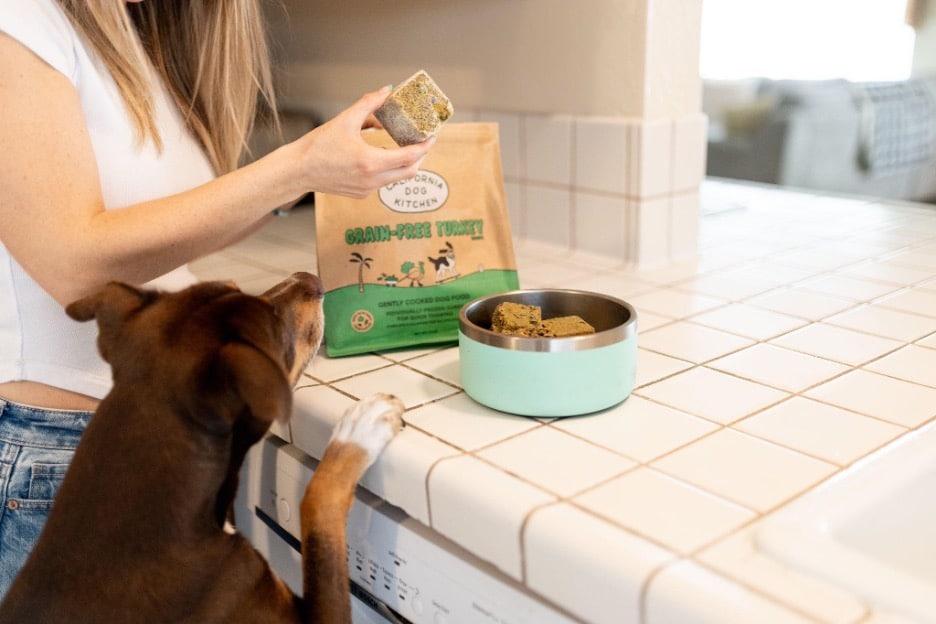
The pet food industry is undergoing a major makeover. These days, more dog owners are treating their pets like family, which means they are looking much closer at what actually goes into the bowl. While big-box kibble has dominated the market for decades, a new wave of “human-grade” fresh food is shaking things up. Leading this charge is California Dog Kitchen, a San Diego-based producer that focuses on small-batch, gently cooked meals. By using organic ingredients and specialized proteins, they are bridging the gap between the health of a homemade meal and the convenience of a ready-to-serve product.
Human-Grade Ingredients and a Gentler Way to Cook
The big difference between mass-produced kibble and small-batch food comes down to two things: the quality of the ingredients and how they’re cooked. California Dog Kitchen uses USDA-certified and GAP-certified organic chicken, ensuring the protein is actually human-grade.
This is a far cry from the “feed-grade” stuff found in many traditional brands, which can include mystery by-products. Because the company cooks everything in its own commercial kitchen in San Diego, they have total control over every single batch. This is a rarity in an industry that often outsources manufacturing to massive third-party factories.
Instead of using the high-heat “extrusion” process that turns ingredients into hard kibble, this food is cooked gently at lower temperatures. Dr. Karen Becker, DVM, explains why this matters: “Cooking food at lower temperatures preserves the structural integrity of proteins and delicate antioxidants that are often destroyed by the high-heat extrusion process of kibble.” By keeping things cool (literally), the food retains its natural moisture and nutrients, making it much better suited to a dog’s digestive system.
Better Digestion Through Fresh Ingredients
One of the biggest questions owners have when switching from kibble to fresh food is: “How much of this is my dog actually using?” In the nutrition world, this is called bioavailability. Basically, the less a food is processed, the easier it is for a dog’s body to break it down and absorb the good stuff. Dr. Justin Shmalberg, DVM, a Board-Certified Veterinary Nutritionist, notes: “Gently cooked diets offer high digestibility, meaning more nutrients are absorbed by the body, and less waste is produced compared to highly processed kibble.”
For dogs with sensitive stomachs or recurring allergies, a simple, small-batch recipe can be a total game-changer. California Dog Kitchen formulates its meals to meet AAFCO nutritional standards for all life stages — including large-breed puppies that eventually grow to 70 pounds or more. For pets with major food sensitivities, access to novel protein dog food is a massive relief. These unique proteins offer an alternative to common triggers like beef or grain fillers, ensuring the dog gets a balanced meal without the itchy skin or upset stomach.
Simple Portions and No-Stress Storage
Let’s be honest: fresh food can sometimes feel like a logistical headache. California Dog Kitchen solves this with a clever frozen cube format. Each bag comes with 14 to 16 cubes, and each cube weighs exactly four ounces. It’s pretty much “plug and play” feeding: you just use one cube for every 10 pounds of your dog’s weight per day. So, if you have a 40-pound dog, they get four cubes. If you have a growing puppy or a nursing mom, you just bump that up by two or three times.
This system takes all the guesswork out of the equation. To keep things safe and fresh without using artificial preservatives, the food stays in the freezer and gets defrosted in the fridge as needed. Once thawed, it stays good for five days. Even the shipping is streamlined: orders go out on Mondays and Tuesdays via UPS in insulated boxes with dry ice. This ensures the food arrives at your door frozen and ready to store.
Sourcing That Actually Cares About the Planet
Modern pet owners aren’t just looking at the ingredients; they’re looking at the brand’s footprint. California Dog Kitchen has leaned into sustainability by using compostable packaging made of kraft paper and a vegetable-based liner. While plastic bags sit in a landfill for thousands of years, these bags break down into soil within 180 days in an industrial composting setting.
The company’s commitment to doing things the right way is also backed by the Good Food Guild. In early 2023, they became one of only two pet food companies accepted into the Guild, which vets producers for transparency, local sourcing, and non-GMO ingredients. On top of that, they donate 1% of all sales to environmental and animal-related nonprofits. It’s a “craft” approach that prioritizes ethics just as much as nutrition.
The Future of the Food Bowl
The move toward fresh, small-batch food shows that we are starting to view dogs as more than just scavengers — they are family members with real biological needs. Brands like California Dog Kitchen are raising the bar for what “premium” pet food actually looks like. While fresh food requires a bit more freezer space and a slightly higher budget than dry kibble, the payoff in energy, coat health, and digestion is making it a popular choice for many.
As more data emerge on the health benefits of gently cooked diets, the industry will likely continue to shift toward these local, high-quality models. For today’s pet owner, making the switch to small-batch feeding isn’t just a passing trend; it’s a way to invest in a dog’s long-term health and happiness.

Leave a Reply